A Glimpse Into Music and Your Brain

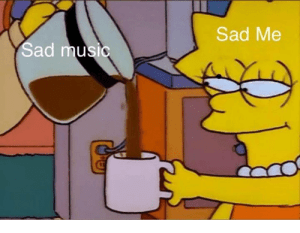
I often poke fun at myself for frequently choosing to listen to sad music when I am already feeling sad. So basically these memes are me.                                                      gY2B76r   sad-me-sad-music-30399116                     But it turns out that listening to sad music can help make you feel a little better. A study published in Scientific Reports found that, “sad music can induce a pleasurable feeling”, which means you may be getting something positive from what most would view as a negative experience. Here’s the link if you want to look into it some more: https://www.nature.com/articles/srep46063

Music doesn’t just sooth you when you’re sad. Music can increase your dopamine levels and help you remember moments better. Music is currently being used to help Alzheimer’s patients. Playing songs that were popular when they were growing up or tied to a significant moment at some point in their life has been known to help trigger their memory. Often times you can see a physical response from patients because they are remembering what they could not without music.

Singing along to your favorite songs can also lower your stress levels. Singing releases endorphins and oxytocin. Releasing these hormones helps you feel better similar to how exercising typically makes people feel better by causing your body to release endorphins. So if you’re stressed out and have a minute to listen to your favorite songs or sing along to a song, go for it. You’ll most likely feel better afterwards.


Here’s another article to checkout regarding music and your brain if you want to know what else music can do for you :  http://ideas.time.com/2013/08/16/singing-changes-your-brain/


Gut Health? What About It?

So I’m sure we all know the deal by now. You ask some super toned or muscular person how they got so fit and they mention how dieting is a large part of it. It’s not hard to link your bodies health to the foods you eat. But what about your brain? Dr. James Farley is a neuroscientist that helps patients with thyroid issues and other chronic health issues. You only have to interview him once to know he’s a big believer in gut health. I learned from him that what you eat 30 minutes before bed and within 30 minutes of waking up has a large impact on your blood sugar levels which in turn impact your sleep. Ok ok, no sleep makes us miserable, we know. But have you looked into what nutrient deficiencies can do to your mental health?

I was in the process of asking Daymond Sewall for an interview when he asked me to read something first and then sent me a link. So let me explain a few things about Daymond Sewall. He’s a definition specialist and he is shredded. He authored the book Shredded Executive, has a large following on Facebook, instagram, and twitter, and has been a personal coach to many. He also runs his own gym. Fitness is his livelihood. But it’s not lifting weights that he stresses the most. It’s eating healthy and tracking the macros of what you eat.

So back to the link Sewall sent. It’s a blog post. I see Doug Cook, RDN The Gut Brain Guy and below that the title to the post. The title, 9 Nutrient Deficiencies That Can Cause Depression, made me go oh no. Nine nutrients? NINE! I thought it was just four! I knew about lack of vitamin D or iron or magnesium or B vitamins contributing to depression but it turns out if you’re low on iodine, zinc, selenium, omega-3 fats, and EPA then you’re running the risk of worsening your depression. You may even be developing depression because your diet lacks a few of these nine nutrients.  Some of these help your thyroid function properly, some decrease inflammation in your body, some help make your metabolism work properly, and if your thyroid isn’t working properly or your metabolism or you have inflammation in your body then it sets off a chain of events that end up damaging your brain which of course hurts your mental health. The good news is there are supplements for most of these nutrients. Now I just need to look into which brands are the real deal, and which aren’t.